


- OTDRs
- Fusion Splicers
- Network & Ethernet Testers
- Cable Certifiers
- Wireless, Antenna & 5G Testers
- Fibre Optic Inspection Scopes
- Power Meter, Light Source, OLTS
- NBN Compliant Equipment
- DSL, ISDN, Copper, HFC, CATV Testers
- Fibre Optic Accessories
- Fibre Traffic Identifiers
- Cleavers
- OTDR Launch Cables
- Optical Fibre Adapters and Test Leads
- Spectrum Analysers
- Fiber Characterisation Test Equipment
- Electrical Test Equipment


Sumitomo Type-72C+ vs Type-82C: Comparison Overview

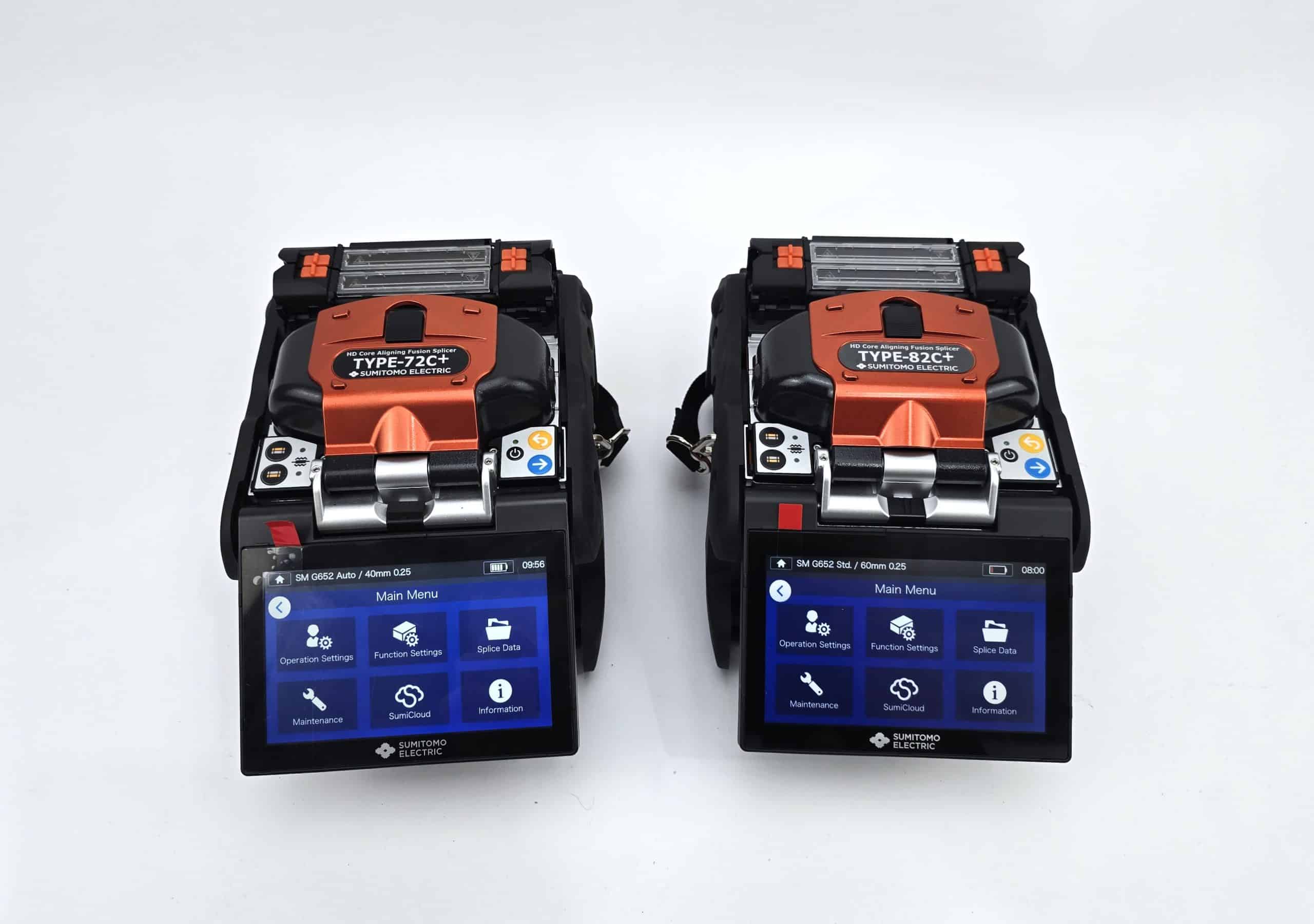
Sumitomo Type-72C+ vs Type-82C: Understanding the Real Difference
Keywords: Sumitomo Type-72C+, Sumitomo Type-82C, fusion splicer comparison, Sumitomo fusion splicer, core alignment, fiber optic splicer
Introduction
When it comes to fusion splicing technology, Sumitomo Electric stands among the most respected names in the fiber-optic industry. Two of its most recognized models — the Sumitomo Type-72C+ and Sumitomo Type 82C+ — are frequently compared by technicians and network engineers worldwide.
At first glance, these models may appear to have slight differences in presentation. However, they perform identically and are built on the same platform. Both offer the same features, internal components, and software capabilities — delivering consistent performance regardless of labeling.
Core Technology and Build
Both splicers are based on Sumitomo’s advanced core alignment technology, providing precise, low-loss fiber splicing for professional field and laboratory applications. They feature rugged construction, fast heating, and an intuitive touchscreen interface for reliable performance under demanding conditions.
Shared Features
- Core alignment system for high-precision splicing
- Automatic splice and heater start for faster operation
- Nano Tune™ optimization for accurate fiber positioning
- Dust- and shock-resistant construction
- Responsive touchscreen interface
- Handles imperfect cleaves for dependable splices
Both models share the same hardware architecture, alignment mechanism, and internal software — meaning they are functionally identical.
Technical Comparison
| Feature | Type-72C+ | Type-82C |
|---|---|---|
| Alignment System | Core Alignment (Nano Tune) | Core Alignment (Nano Tune) |
| Splicing Time | Approx. 5 seconds | Approx. 5 seconds |
| Heating Time | Approx. 8 seconds | Approx. 8 seconds |
| Display | 5” LCD Touchscreen | 5” LCD Touchscreen |
| Battery Capacity | Up to 320 splices per charge | Up to 320 splices per charge |
| Connectivity | USB / Bluetooth / Wi-Fi | USB / Bluetooth / Wi-Fi |
| Environmental Rating | IPx2 / IP5x | IPx2 / IP5x |
| Software | Auto Mode with Real-Time Tuning | Auto Mode with Real-Time Tuning |
Model Similarity and Labeling
While both names exist within Sumitomo’s product lineup, there is no difference in functionality or internal design between them. They share the same hardware platform, firmware, and splicing algorithms — offering identical speed, precision, and reliability.
The distinction in model names reflects only minor variations in labeling or market identification, not in the machine’s technical capabilities.
Performance and Reliability
Both units deliver the trusted Sumitomo performance that professionals expect — fast cycles, accurate alignment, and durable operation even in challenging conditions.
- Precise core alignment with minimal insertion loss
- Consistent splicing quality across single and multi-mode fibers
- Excellent battery life and field portability
- Stable operation under dust, vibration, and temperature variations
Conclusion
When comparing the Sumitomo Type-72C+ and Type-82C, it becomes clear that they are the same fusion splicer — sharing identical construction, optical performance, and software intelligence. Any difference in name is purely nominal and does not affect the machine’s capabilities.
Choosing either model means investing in the same level of Sumitomo engineering excellence — a reliable, high-precision splicer designed for professionals who demand consistent performance in every splice.
The label may differ, but the technology is exactly the same.
🎥 Watch the full comparison video on our channel for a hands-on look at the Sumitomo Type-72C+ and Type-82C in action.